

“Good luck” is easy. But it gets repeated a lot. And in formal emails, it can feel too casual.
This guide gives you 42+ professional ways to say “good luck.” You’ll find the right phrase for emails, interviews, presentations, and everyday work chats. We’ll also explain what “good luck” really means, and how to wish someone good luck professionally in any situation.
What Does “Good Luck” Mean?
At its core, “good luck” is a short way of saying “I hope things go well for you.” It’s used before someone faces a challenge, a decision, an event, or a new chapter, a job interview, a test, a flight, a first day at work, or even a risky business move.
The phrase doesn’t actually have anything to do with luck in the literal sense (most of the time, success depends on skill, effort, and preparation, not chance). Instead, it’s become a social shorthand for encouragement. When you say “good luck” to a coworker before their big presentation, you’re really saying, “I believe in you, and I hope it goes smoothly.”
This is exactly why so many alternatives exist. Phrases like “wishing you success,” “you’ve got this,” or “I have full confidence in you” carry that same supportive energy, but they shift the focus from chance to ability, which often feels more genuine and more professional.
When to Use Alternatives to “Good Luck”
So when should you reach for one of these alternatives instead of the classic two-word phrase? Here are the most common situations:
Repetition in conversations – If you’ve already said “good luck” to the same person recently, switching it up keeps your message from sounding copy-pasted.
Formal emails and business letters – Phrases like “wishing you continued success” or “I trust you’ll do great” sound more polished in corporate communication.
Job interviews and career milestones – A more specific phrase (like “I’m confident you’ll make a great impression”) shows you actually thought about the situation.
High-stakes events – For big presentations, exams, or competitions, a phrase that acknowledges the effort someone put in feels more meaningful than a generic wish.
Team and leadership communication – Managers and team leads often want language that builds confidence rather than implying the outcome is left to chance.
Cross-cultural or international communication – Some alternatives translate more clearly and avoid idiomatic confusion for non-native English speakers.
Basically, anytime you want your message to feel intentional rather than automatic, an alternative phrase is worth considering. Knowing a few other ways to say good luck also makes you sound more articulate and emotionally aware, something that matters a lot in workplace communication.
Is “Good Luck” Professional?
Yes, “good luck” is generally considered professional and perfectly acceptable in workplace settings. It’s polite, warm, and universally understood. You won’t offend anyone by saying it to a colleague before a meeting or to a client before they sign a contract.
That said, “professional” doesn’t always mean “best fit.” In more formal contexts, think executive emails, official announcements, or written correspondence with clients, slightly more refined language can elevate your tone without losing warmth. For example:
| Situation | “Good Luck” Works? | Better Alternative |
| Quick Slack message to a teammate | ✅ Yes | “You’ve got this!” |
| Formal email to a client before a big decision | ⚠️ Okay, but plain | “Wishing you continued success” |
| Farewell message to a departing employee | ⚠️ Okay, but generic | “Wishing you all the best in your next chapter” |
| Encouraging a junior colleague before a presentation | ✅ Yes | “I have every confidence you’ll do great” |
| Official company announcement | ❌ Too casual | “We extend our best wishes for your future endeavors” |
So, while there’s nothing wrong with “good luck,” learning how to wish someone good luck professionally, using phrases that match the formality of the situation, shows a level of thoughtfulness that people genuinely notice and appreciate.
Professional Ways to Say “Good Luck”
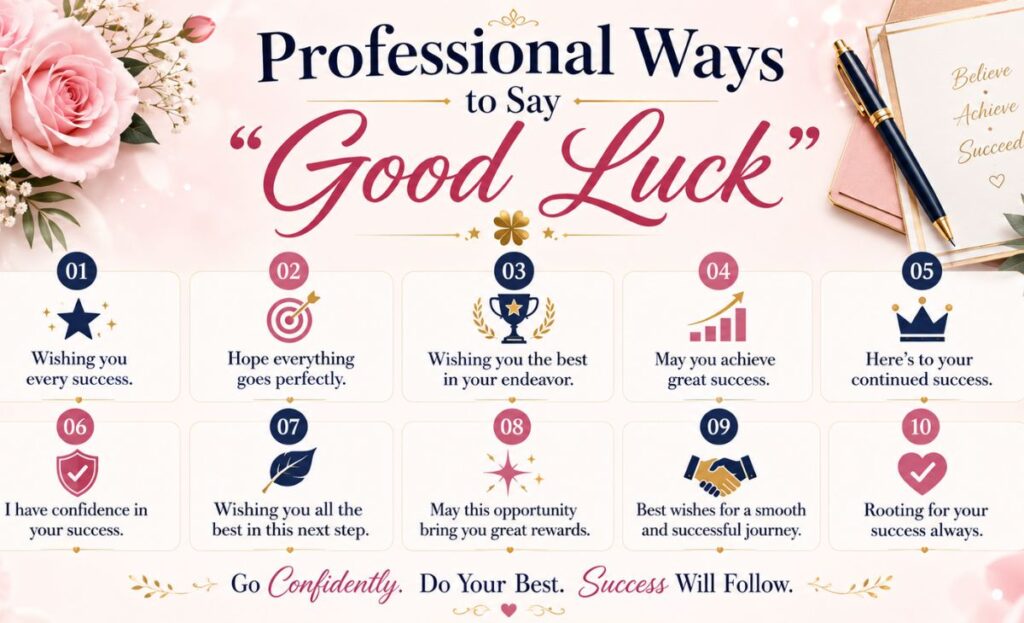
Below are some of the best other ways to say good luck professionally.
1. Wishing You Success
Example:
Wishing you success in your upcoming presentation.
2. Best Wishes
Example:
Best wishes for your new role.
3. All the Best
Example:
All the best for tomorrow’s meeting.
4. Wishing You All the Best
Example:
Wishing you all the best in your future endeavors.
5. Best of Luck
Example:
Best of luck with your project.
6. Wishing You Every Success
Example:
Wishing you every success in your career.
7. I Know You’ll Do Great
Example:
I know you’ll do great during the interview.
8. I Believe in You
Example:
I believe in you and your abilities.
9. I Have Confidence in You
Example:
I have complete confidence in your skills.
10. You’ve Got This
Example:
Stay calm, you’ve got this.
11. I Trust You’ll Do Great
Example:
I trust you’ll do great in your presentation.
12. Wishing You Continued Success
Example:
Wishing you continued success in your new position.
13. May Your Efforts Be Rewarded
Example:
May your efforts be rewarded with great results.
14. Hope Everything Goes Smoothly
Example:
Hope everything goes smoothly tomorrow.
15. Hoping for the Best
Example:
We’re all hoping for the best.
16. Sending Positive Thoughts
Example:
Sending positive thoughts your way.
17. Stay Confident
Example:
Stay confident and do your best.
18. Keep Up the Great Work
Example:
Keep up the great work and you’ll succeed.
19. Wishing You Great Success
Example:
Wishing you great success in your endeavor.
20. I Know You’ll Excel
Example:
I know you’ll excel in this role.
21. Make Us Proud
Example:
Go ahead and make us proud.
22. Do Your Best
Example:
Just do your best.
23. Go for It
Example:
Go for it, you are well prepared.
24. Give It Your Best Shot
Example:
Give it your best shot.
25. You Are Ready
Example:
You are ready for this challenge.
26. Wishing You a Smooth Journey
Example:
Wishing you a smooth journey in your new position.
27. I Hope Things Work Out Well
Example:
I hope things work out well for you.
28. May Success Follow You
Example:
May success follow you wherever you go.
29. I Am Rooting for You
Example:
I’m rooting for you.
30. Wishing You Prosperity
Example:
Wishing you prosperity and success.
31. Go Shine
Example:
Go shine and show everyone your talents.
32. Knock Them Dead
Example:
Knock them dead during your performance.
33. Break a Leg
Example:
Break a leg at the audition.
34. Fingers Crossed
Example:
Fingers crossed for you.
35. You Will Be Amazing
Example:
You will be amazing.
36. Stay Positive
Example:
Stay positive and keep moving forward.
37. Keep Believing in Yourself
Example:
Keep believing in yourself.
38. Wishing You Nothing but Success
Example:
Wishing you nothing but success.
39. I Hope You Achieve Great Things
Example:
I hope you achieve great things.
40. Here’s to Your SuccessExample:
Here’s to your success.
41. I Know You’ll Succeed
Example:
I know you’ll succeed.
42. Go Out There and Shine
Example:
Go out there and shine.
43. Show Them What You’re Made Of
Example:
Show them what you’re made of.
How to Say Good Luck Professionally: Quick Tips
Knowing what to say is only half the equation, knowing how to say it makes the message land well. Here’s how to wish someone good luck professionally without sounding stiff or robotic:
Match the formality of the relationship. A close coworker might appreciate “you’ve got this,” while a client deserves “wishing you continued success.”
Be specific when possible. Instead of a generic wish, mention what the person is doing: “Wishing you the best for your presentation to the board this afternoon.”
Keep it short. One or two sentences is plenty, professional messages don’t need to be long to be sincere.
Avoid overused idioms in international settings. Phrases like “break a leg” can confuse non-native English speakers; stick to clearer wording like “I hope it goes well.”
Follow up afterward. A quick “how did it go?” message later shows you genuinely cared about the outcome, not just the formality.
FAQ’s
What are other ways to say good luck?
Some popular alternatives include “All the best,” “Best wishes,” “Wishing you success,” and “I know you’ll do great.”
How do you wish someone good luck professionally?
Use polished phrases such as “Wishing you every success” or “Best wishes for your upcoming project.”
Is it okay to say good luck in business emails?
Yes, but more formal alternatives often sound more professional.
What is the most professional replacement for good luck?
“Wishing you every success” is one of the most professional options.
How do you encourage someone before an interview?
You can say, “I have confidence in you” or “I know you’ll do great.”
Conclusion
Although “Good luck” is perfectly fine, using different expressions can make your messages sound more thoughtful and professional. Whether you’re encouraging a coworker, congratulating a friend, or writing a formal email, these other ways to say good luck can help you communicate support with confidence.
If you’re wondering how to wish someone good luck professionally or how to say good luck professionally, phrases like “Wishing you every success,” “All the best,” and “I know you’ll do great” are excellent choices. By using the right words, you can leave a positive and lasting impression.

I am David Smith, a passionate blogger and skilled writer. I create clear, engaging, and high-quality content on different topics. I focus on delivering useful and easy-to-understand articles for my readers.